Built Out of Annoyance
People keep asking what I actually use. Fair enough. I've got a site full of projects now, and most of them exist for one slightly petty reason: something annoyed me. That's the whole philosophy, if you can even call it one. When a tool annoys me enough, I build my own.
So this is half a list of what's on my desk and in my dock, and half the story of how it ended up like this.
The Desk
Let's get the physical stuff out of the way first, because it's the least interesting part and I want to get to the hating.
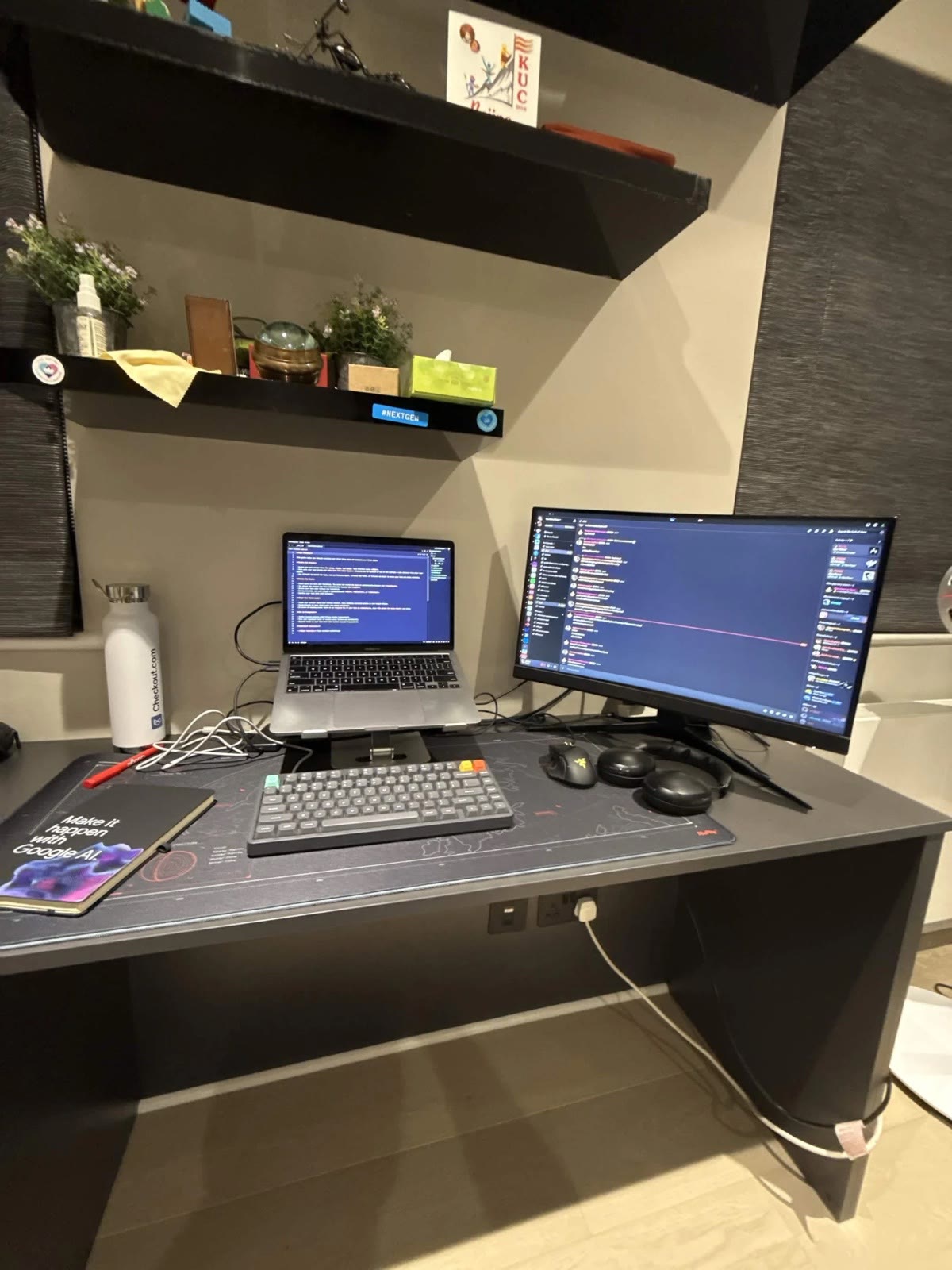
I run two Macs. My personal one is a MacBook Pro with an M2 and 8GB of RAM. Yes, 8GB. My work one is a MacBook Pro with an M5 Pro and 24GB.
The monitor is an MSI MAG242C. It's a cheap one. I bought it in my first year of uni with birthday money and a pile of Currys PC World gift cards, and it's still the one I'm staring at.
The keyboard is a NuPhy Node 75, the high-profile one, with Red Max switches. It sits on a NuPhy Orbit deskmat, which is really cool, and I won't be taking criticism on that.
The mouse is a Razer Basilisk V3, and this is where the annoyance starts. Razer doesn't provide customisation support on macOS, so for basic support I have to resort to a third-party app, Razer macOS. A mouse shouldn't need someone else's app just to work properly. I'm thinking of switching.
Phone is an iPhone 16 Pro Max. For audio it's AirPods Pro (3rd gen), and Sonos Ace when I want over-ears.
And then there's the desk itself, which I'm kind of hating. It's really small. It barely fits the things I need, and I had to drill a hole in it just to get some super basic wiring done. While you're looking at the photo, spot the important stuff: the #NextGen sticker from the Checkout.com graduate community, the Checkout.com bottle, and my COVID vaccine sticker sitting proudly right next to the NextGen one. Priorities.
Where the Code Happens
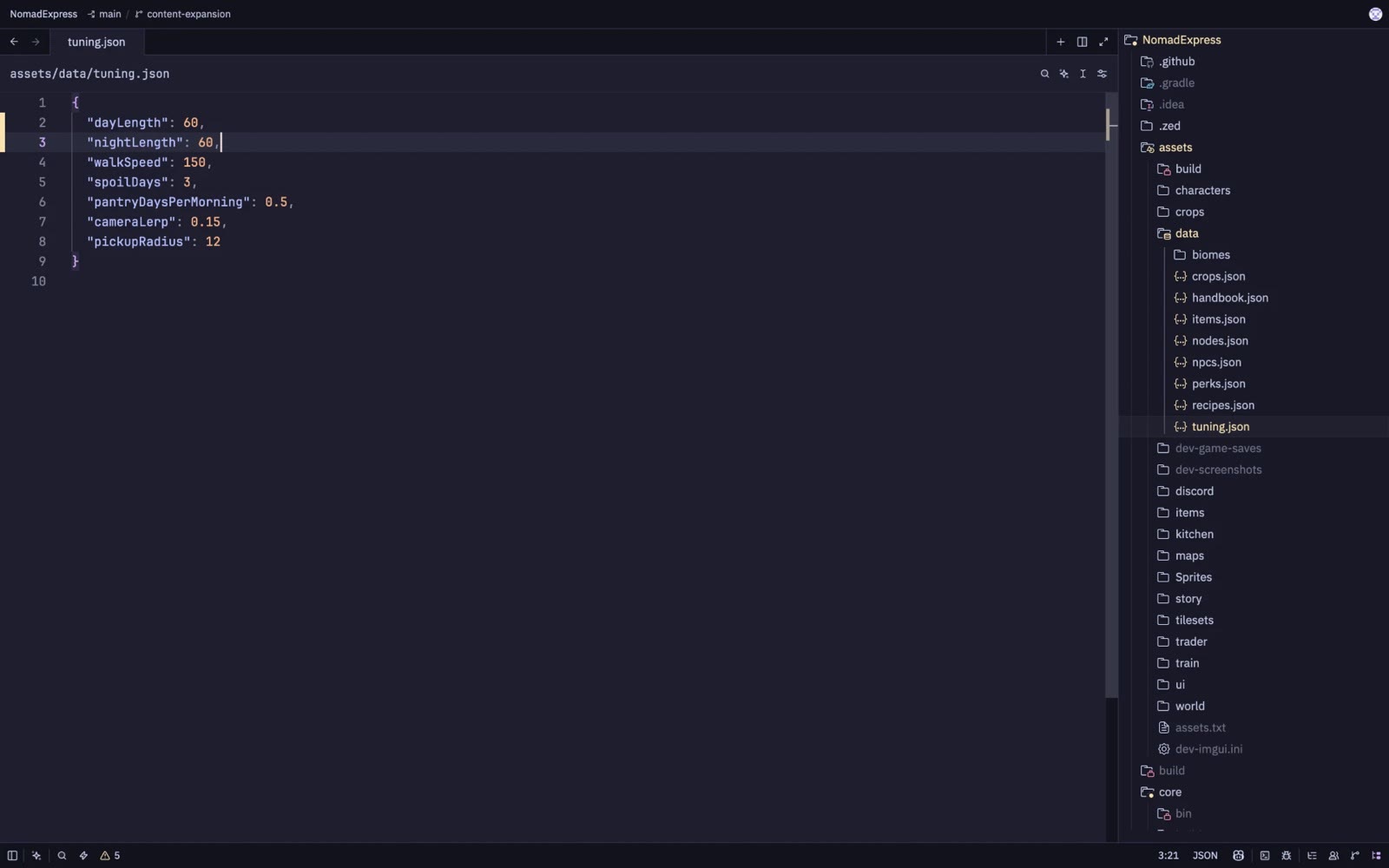
My go-to editor is Zed. For anything agentic-first I use the editor that comes with Orca, the agent orchestration tool I run my agents through. It's an ADE, and we'll get to it.
The theme is Catppuccin Mocha, and has been for probably three years now. Fonts rotate between the Nerd Fonts: FiraCode, Hack Nerd, JetBrains Mono, that kind of thing.
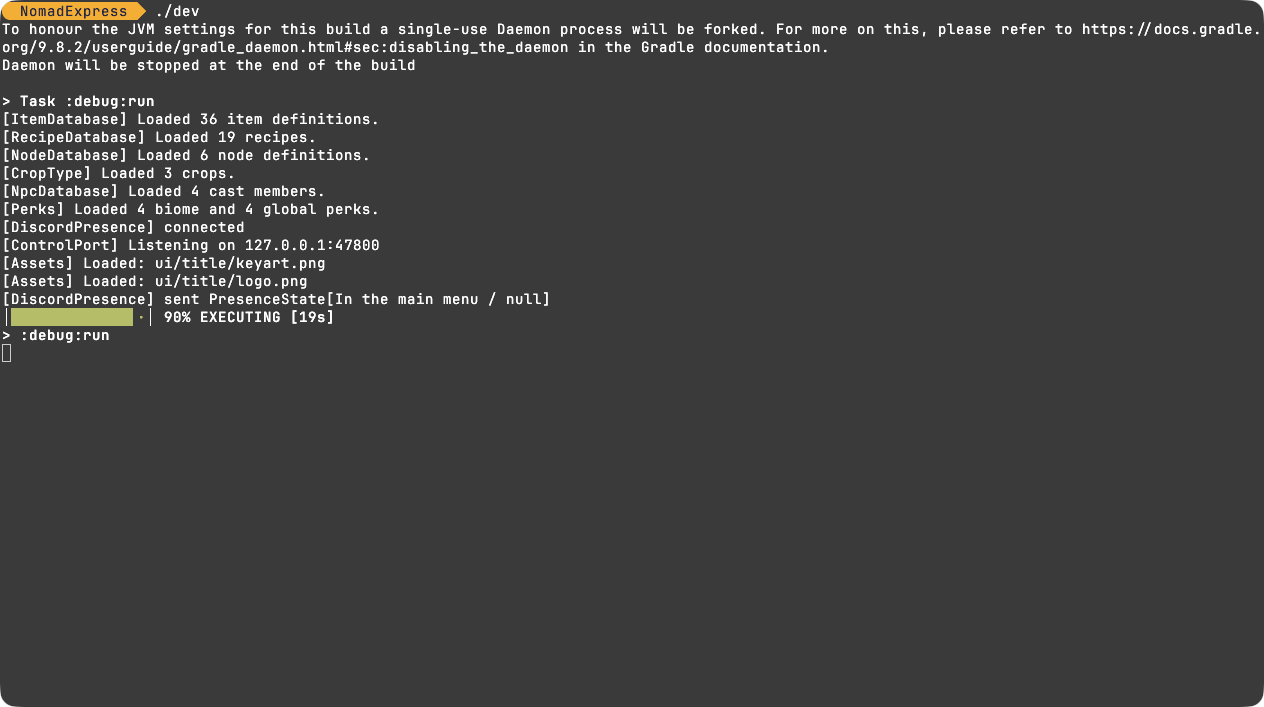
The terminal is kitty on my own machine and iTerm2 at work, because that's basically what my company lets me use. I'm not sad about it. I'm a little sad about it. The shell is zsh, always.
What's in My Dock
My launcher is Kepler, built by someone I met on a Discord server. I came to it from Raycast, which I'll get to.
My browser is Helium for now, but I'm waiting on Radian to be released so I can move to it. At work it's YAB (YetAnotherBrowser). Notes I keep generic with Apple Notes. Music is Spotify, and I'm a massive Abel fan. That's The Weeknd, for anyone not on first-name terms.
I keep the regular Discord app, though I was on Vesktop before this. I'm also in talks with someone who's making a native, Swift-based Discord app for macOS, so I might switch to that.
For art, especially for Nomad Express, it's Aseprite.
The Two Apps I Built Because I Had To
I used to use Paste and CleanShot X. Then my company decided it would start rejecting apps that have a cloud feature but don't have enterprise accounts to disable it.
So I built my own. Cubby replaced Paste and Glint replaced CleanShot X, and both are local only. No cloud, nothing to switch off, nothing to reject. I really do use them every day, and they're genuinely lifesaving.
Here's the funny part: I never actually got around to getting them approved at work. So they mostly live on my own machine. The apps I built because of my company's rules are, to this day, not approved by my company.
Languages I Love, and Languages I Put Up With
Work is largely C#, and nothing else except YAML files for workflows and stuff.
My apps are in Swift because I try to go native, for better optimisation and smaller bundle sizes. Serenity is in Python because I started it at uni, back when I was a very Python-heavy data science student. Nomad Express is in Java, inspired by Minecraft and by HomeGrown, an indie game in pre-release that's also a big part of why I started Nomad Express in the first place.
My favourite is, and will always be, Python. It's quite simply a beautiful language. Easy to read, easy to understand, and it's the one that introduced me to programming, so it'll always have a place in my heart. And with uv and pip, life's just easier.
Now for the hate. I have a lot of it for JavaScript, TypeScript and Java. I'm just not a fan of their syntax or their tooling. With JS and TS, I've seen npm, and npx, and pnpm, and yarn, and bun, and probably hundreds more. And don't forget about React, Next, TanStack and all the other frameworks and bullshit that come with them.
Java is terrible with Maven and Gradle. Just terrible. There are no other words for how much I hate them. (Yes, Nomad Express is in Java. I'm aware.)
I'm sure these problems exist with C# too, but my company has done a great job of making NuGet packages easy to use, so no complaints yet. I'm still not using it for personal projects, though.
Swift is the middle ground. I like the language. I hate that the best way to use it is Xcode, which is genuinely a hair-ripping piece of software.
Where AI Fits
AI is an interesting one, because it's part of both my work and my personal projects, and I use it completely differently in each.
At work I'm very AI-native, mostly because that's kind of what's expected of me. For a large Jira ticket, I let AI do the whole thing in its own way. Then I get it to make a nice HTML walkthrough with a notes section (I have a skill for this). That walkthrough is my self-review. I read through it line by line while the AI explains what's happening, and I make sure I actually understand it, or leave feedback where there's a better alternative. I export the notes, they go back to the AI to get fixed, and then I re-read the updated walkthrough. That loop repeats until I'm happy, and only then does it go up for review.
Personal is different. I've come to terms with the fact that 9 times out of 10, the AI will do what it needs to do perfectly. If I give it a good enough prompt for what I want, it can craft it perfectly. I've done that heavily for Serenity. A lot of my personal projects come from Claude: Serenity, CapitalEngine, the Mac and iOS apps.
Nomad Express is the one that hasn't seen Claude, because it's more art than programming. Some of its workflows came from Claude, like automating releases to itch.io, but they don't touch the game. They're just a speed-up, so I don't have to upload files by hand.
For code review I use Kodus and OpenCode Go. I've also learnt about a great feature in Claude Code called Auto-fix: when Kody leaves a review, Claude gets notified and addresses it.
All of my AI tools are Claude-centred. Claude Code, and Orca as my ADE, with Claude as my main agent and also my subagent of choice. I recently went from a Claude Pro to a Claude Max subscription. I've found Claude is the best when it comes to programming, and it has some of the best tooling and support.
I also use a cheeky amount of Gemini for quick questions, and it's slowly replacing a lot of my Google searches. Nowadays I mostly use Google to find sites, not information. Gemini gives me sources, and if I don't trust what it's saying, I go and read them.
What does AI get wrong? Mostly it misses things here and there. It won't always give me what I asked for, and sometimes it just ignores one or two things. So I go back and say: you missed xyz, why did that happen, go fix it now.
A Second Computer in the Cloud
I use Oracle for my host because it gives me a lot more room to do things my way. It's basically a second computer. I can always SSH in and fix things just like I would locally.
Big Bertha came about because I grew tired of Dozzle and Portainer being terrible websites. I wanted to combine them, and add the features they lock behind paywalls, for free. It was fully coded with AI. My only input was which features to have and how they'd look and be designed.
I use Cloudflare because it's amazing for what it gives you: DDoS protection, easy domain management, and it links up easily with Nginx Proxy Manager. The only good NPM.
The Time Big Bertha Gaslit Me
When I was building Big Bertha, I got the AI to design it and make it live. As soon as it was up, I saw the Serenity dashboard was having issues.
So I went into Dozzle, which was still up. No issues. I went back to Big Bertha, copied the logs and gave them to Claude. It found no issues either. Then I went into the Oracle machine myself and read the Docker logs for the dashboard. No issues.
By now I'd spent a good 40 minutes trying to find a fix, and I was properly confused. So I went back to the session that was building Big Bertha and asked it where these logs were coming from.
It told me it had put Big Bertha live with mock data. The crashes were just there to show how crashes would look in the UI. It hadn't hooked up the live logs yet.
Forty minutes. Mock data.
Things I've Dropped
I tried Zen and dropped it. It's a good imitation of Arc, but terrible with resource management. Contrary to what people would have you believe, Gecko is not more memory-efficient than Chromium. Chrome might be worse than Firefox, but its engine is better, so it really comes down to the developer of the browser. Helium has been a great replacement: super easy to use, lightweight, and just super fun.
I also dropped Raycast after using it for more than two years. It was getting sluggish, and that's how I found Kepler. It's been really good, and because I'm in contact with the dev, I've been able to bring up issues and get them fixed.
So, Yeah
That's the setup. A desk that's too small, a cheap monitor that's still going, a mouse I'm about to replace, and a handful of apps that exist because something else annoyed me. When a tool gets in my way enough, I build my own. That's how Cubby, Glint and Big Bertha happened.
Whatever annoys me next, you'll probably find it in labs.